Building date: 1845
Original use:
Corner structures:
Mortar application and content:
Types and uses of stones:
Types and choice of windows:
Structures with similar masonry details:
Masons who worked on building: Pliny Perkins
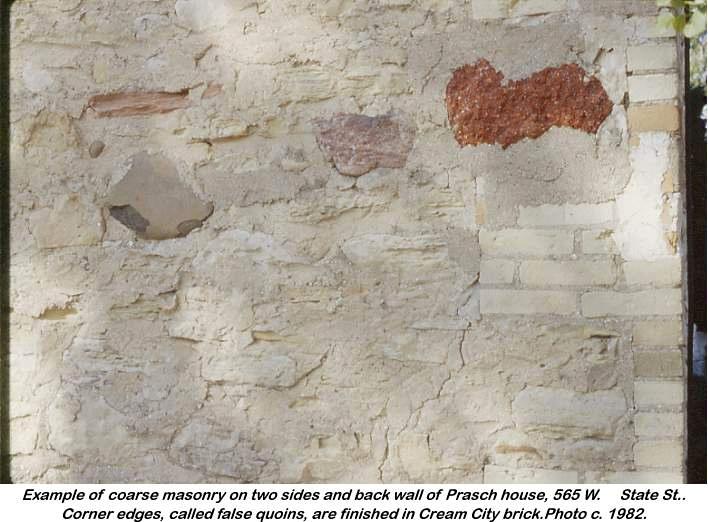
Unique features: Three of the walls are coarse masonry, front facade being cobblestone with brick quoins.
Map views courtesy Google Maps. Address is Google Earth confirmed; 42°40'26.62"N 88°17'30.95"W. Current owner of record, King as of the 2019 Tax Roll.
City of Burlington and Racine County Maps.
This cobblestone house at 565 West State St. in Burlington was built in 1845 in the style of a cube as the home of Pliny Merritt Perkins. He was born in Trenton, New York and first settled within family in Joliet, Ill. before coming to Burlington in 1837. Over the years he became a prominent local industrialist. Three of the walls are coarse masonry, the front facade being cobblestone with brick quoins. Richard Palmer blog.
The Prasch house sits on West State Street near South Kendrick. Originally a farmhouse, it was built in the 1840s by Pliny Perkins on a foundation believed to have been laid by John Acken. After Acken's wife and child died, he sold the farm to Perkins and left the area.
Perkins was one of Burlington's earliest settlers and a leading businessman. Besides this farmhouse, he had a home on Geneva Street (now Milwaukee Avenue) where the city parking lot now is. A portion of that house was later moved out on Highway P near Bohner's Lake, where it became the Kiekenbush tavern.
When building the farmhouse, Perkins left three of the walls in coarse masonry. The front of the building, however, was given the handsome veneer of cobblestones. Unlike most houses of similar construction, the cobblestones here were graded from the smallest at the bottom to the largest at the top.
The wooden lintels on the windows and doors are flush with the surface of the walls, and the corner edges - called false quoins - are finished in Cream City brick.
The roof beams in the attic are hand-hewn with no saw marks on them and are shaped like the spokes of an umbrella.
In the basement is a fieldstone room, blackened with greasy smoke, which was probably used as an indoor smokehouse. In another part of the basement, Doug and Carol Lind, the current owners, discovered a built-in fireplace oven, which did not appear to have been used.
John Prasch bought the farm in 1869, and the house was in the Prasch family for 90 years. In 1913, a part of the property - called the Prasch addition - was opened for sale. By May 1919, 16 homes had been built and, at that time, an additional 14 lots were sold. The Linds, who have owned the Prasch house since 1977, are just the sixth owners. (Note: Doug Lind passed away in 2007.) Burlington Historical Society.
Cobblestone Buildings in Wisconsin, Racine #10
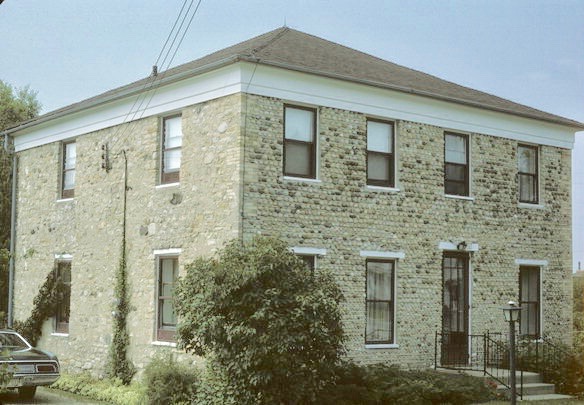 Perkins-Prasch house.jpg ¹ | 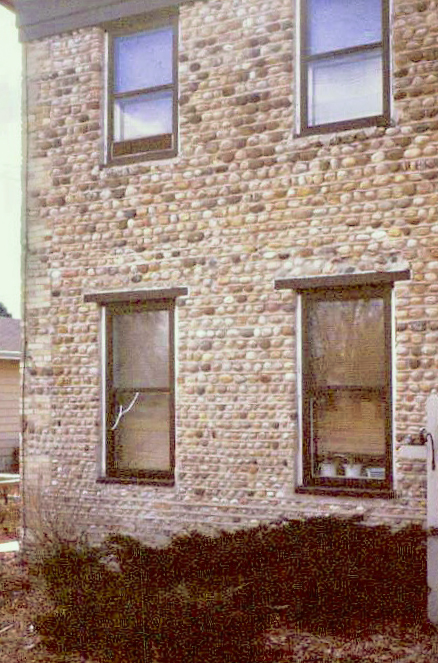 Prasch House.jpg ³ Note how cobblestones are graded from smallest at the bottom to largest at the top. Ca. 1982 | 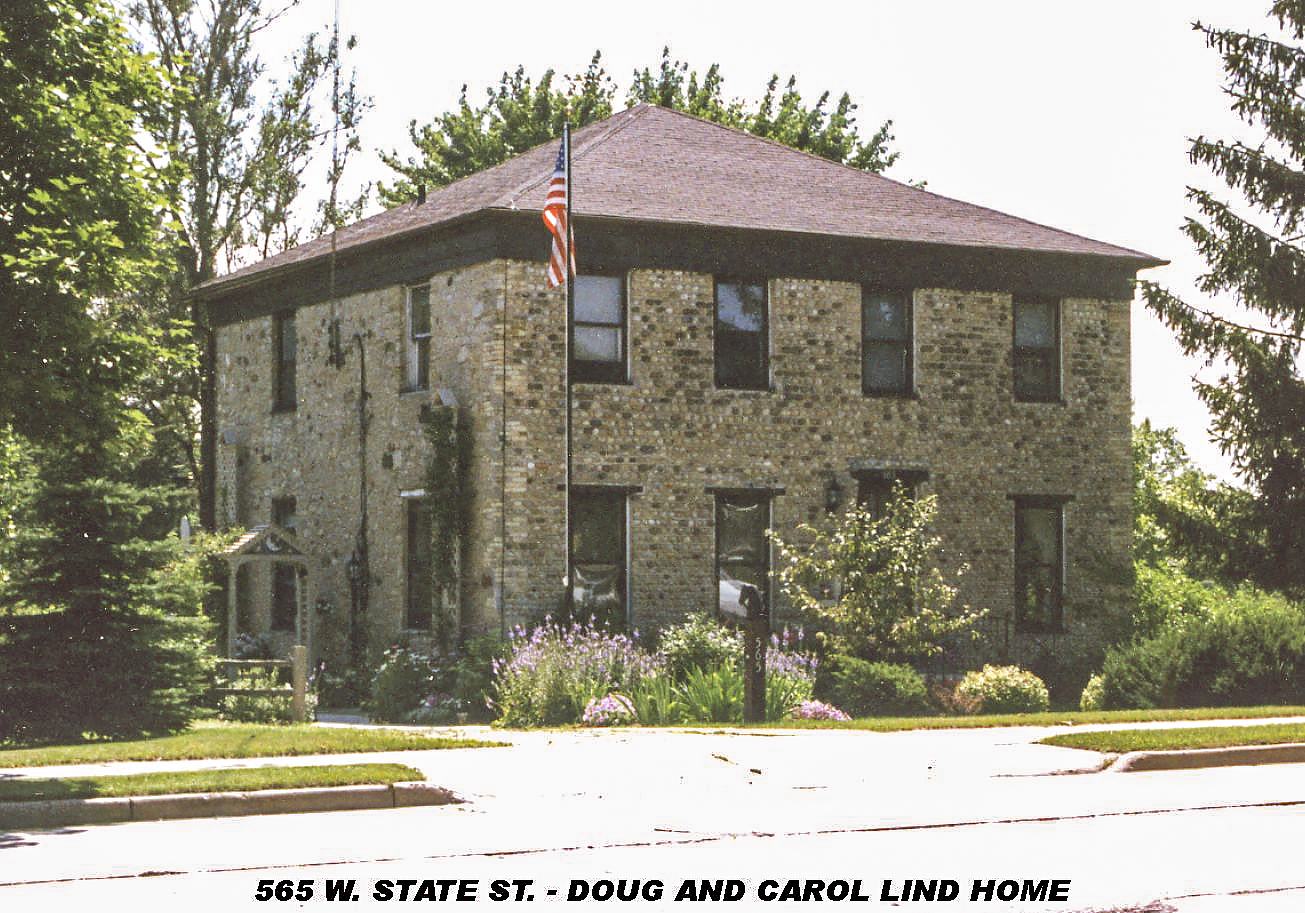 HSES0386a.jpg ² | 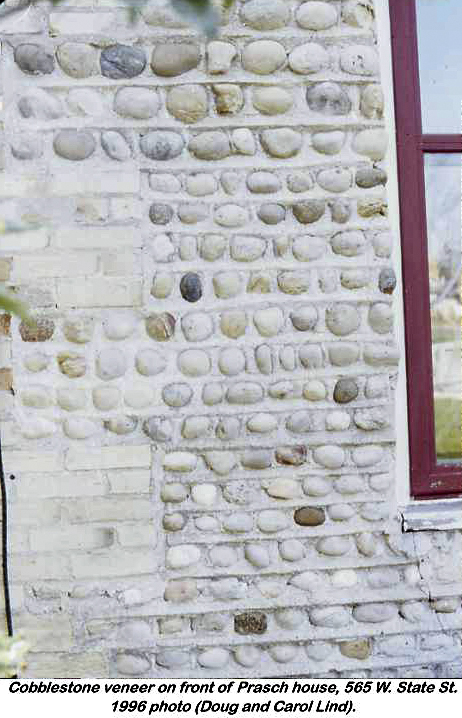 PraschHouse2.jpg ² Note how cobblestones are graded from smallest at the bottom to largest at the top. |
 PraschHouse3.jpg ² | 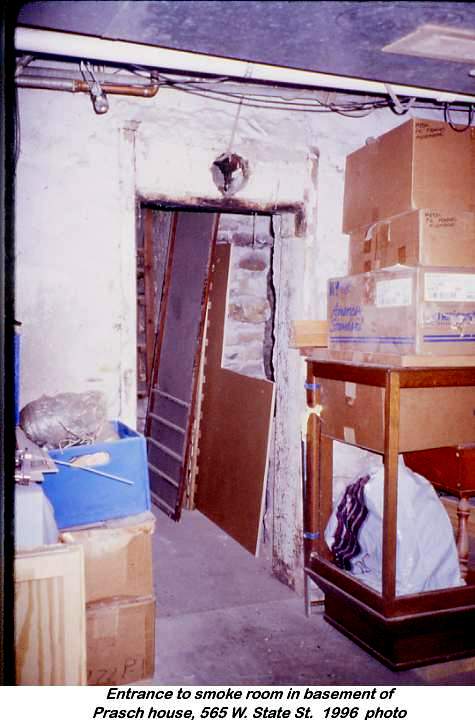 PraschHouse5.jpg ² | 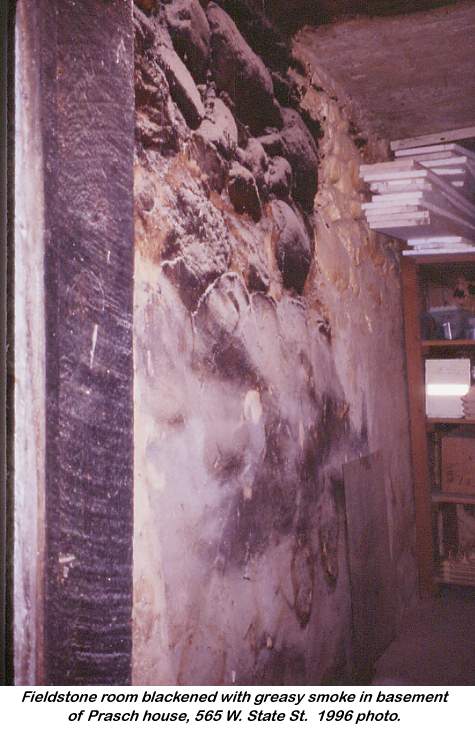 PraschHouse4.jpg ² |
¹ Image courtesy Richard Palmer blog. Attribution not provided.
² Images courtesy Burlington Historical Society, courtesy Doug and Carol Lind 1996.
³ Image courtesy Burlington Historical Society 1982
